When the ceiling stains spread overnight or shingles start curling along the eaves, most New Jersey homeowners reach for the same search: roof repairman near me. That impulse is right. Small roof problems snowball quickly in our climate. Freeze-thaw cycles pry open tiny gaps. Spring nor’easters push wind-driven rain into seams that looked fine the day before. A good roofing contractor near me can tell the difference between a simple fix and a failure-in-progress, and that judgment saves money.
This guide collects what I’ve learned after years walking NJ roofs, from Cape May capes to Bergen County colonials. You will find the repairs I see most often, fair price ranges for our market, and the factors that push costs up or down. I will also explain when a repair is smart and when a roof replacement is the more honest recommendation. If you are pricing a new roof cost, you will find realistic ranges based on material and pitch, not wishful thinking.
How New Jersey’s climate shapes roof problems
Roofs here live hard lives. We ask them to bake under July sun, hold snow in January, and ride out wind that works fasteners loose. The big driver of wear is thermal movement. Asphalt shingles, PVC pipe boots, metal flashing, and wood sheathing all expand and contract at different rates. By their fourth or fifth winter, you start to see hairline cracks in boots and sealants. By their tenth, the shingles’ surface granules have washed down into the gutters like black sand.
Rainfall patterns matter too. Nor’easters and summer thunderstorms bring hours of wind-driven rain. If flashing was slipped under the wrong layer or a ridge vent lacks end caps, that sideways water will find a path. Along the Shore, salt air accelerates corrosion on aluminum and galvanized steel, and wind exposure is simply higher.
Homes built before the early 2000s often have undersized attic ventilation. Trapped heat bakes shingles from the underside, turning a 30-year shingle into a 20-year performer. Pair that with bathroom fans that dump steam into the attic instead of outdoors and you get condensation, mold on sheathing, and nails that rust and drip.
Understanding these pressures helps explain why some NJ roofs fail earlier than marketing brochures promise, and why certain repairs come up again and again.
The quick checks I do on every NJ roof
Before we talk about numbers, it helps to know how a pro evaluates a roof in our area. I start on the ground, then the attic, then the roof. From the ground I study the layout: dormers, valleys, skylights, step flashing areas, dead-end walls. I watch gutters during a rain if I can. Overflow at inside corners hints at valley trouble or too-few downspouts. In the attic I look for daylight at penetrations, rust trails below nails, and darker sheathing at the eaves where ice dams bite.
On the roof, I work the “leak suspects” first: pipe boots, chimneys, skylights, wall intersections, ridge vents, and valleys. I press shingles to feel brittleness. If the mat breaks under modest bending, repair options narrow. I tug a few fasteners, peek under ridge caps for signs of wind lift, and check for sealant that has become chalky or shrunk back.
Most leaks I find in New Jersey tie back to flashing, sealant, or penetrations, not the field shingles themselves. That means many fixes are surgical and cost-effective, as long as the roof still has life left.
Common NJ roof repairs and what they cost
Costs swing with accessibility, roof pitch, story count, and how much of the surrounding area must be opened up to reach the failed detail. Labor rates in North Jersey trend a notch higher than South Jersey, and coastal scaffolding or harness requirements can add mobilization time. With that context, here are realistic ranges homeowners see in 2026.
Pipe boot replacement
The rubber or neoprene collar around your plumbing vent stack is a small part with outsized impact. In NJ sun and cold, the collar cracks in 7 to 12 years. Water follows the pipe and shows up as a ceiling stain near bathrooms.
Typical cost per boot: 250 to 600 for asphalt shingle roofs. Steeper pitches, tile or slate, or multiple shingle courses to lift can push it to 700 to 900. I often replace the boot with a lead or silicone upgrade that outlasts standard rubber. That small upcharge saves a revisit in five years.
Chimney flashing and counterflashing
Chimneys are leak factories when flashing is short, caulked instead of stepped, or never counterflashed into the mortar joints. If a leak shows on the wall below a chimney or at the ceiling near it, I check here first. On stucco or stone chimneys, the detailing gets trickier.
Reflashing and counterflashing in NJ typically runs 1,200 to 2,800 for brick with straightforward access. Stone veneer or stucco can be 2,500 to 4,500 because you may need to cut and patch finishes. If the chimney crown is cracked or the mortar is failing, tuckpointing or a new crown is extra and worth doing while scaffolding is up.
Skylight leak repairs and replacements
Old dome skylights with brittle acrylic and leaky gaskets are a special kind of headache. Many so-called skylight leaks are really flashing leaks. If the skylight is less than 15 years old, sound, and a reputable brand, a reflash and new underlayment often solves it for 700 to 1,800. If the unit is old, fogged, or a no-name with proprietary flashing long discontinued, replacement is smarter.
New fixed skylight with factory flashing kit and reroofed curb: 1,500 to 3,000 installed for a common size. Venting units and larger sizes: 2,500 to 4,500. On steep roofs with interior finishing, costs rise.
Valley repairs
Open or closed valleys handle tons of water. Nails driven too close to the valley centerline or woven shingle valleys that have cracked can let water back up. I see fast wear where two roofs meet and dump into a single valley.
Cut-out and rebuild of a 6 to 10 foot problem section, including ice and water shield and new shingles: 800 to 1,800. If the valley metal is rusted throughout, a full-length valley replacement can run 2,000 to 4,000 depending on length and material.
Ridge vent and cap fixes
Ridge vents work until they do not. Missing end plugs, fasteners that backed out, or thin foam baffles that invite wind-driven rain can be culprits. I also see ridge caps that have cracked or blown off.
Patching sections and recapping a typical ridge runs 400 to 1,200. Replacing an entire ridge vent with a higher quality, external baffle style and new caps often lands at 1,000 to 2,200, depending on length and height.
Ice dam damage at eaves
Snow melt running down to the cold eave freezes, backs water under shingles, and soaks the sheathing. The fix is part carpentry, part roofing: strip the eave, replace rotten boards, add ice and water shield up the roof 3 to 6 feet, and relay shingles. Insulation and air sealing inside the attic, plus proper ventilation, complete the defense.
Local costs for an eave rebuild of 10 to 20 feet: 1,200 to 2,800. Larger sections cost proportionally more. Attic work varies: air sealing and adding vents and baffles can add 600 to 2,500, and it is money well spent.
Wind damage and missing shingles
South-facing slopes and ridges take the brunt of wind. Once the factory seal strip fails on older shingles, tabs lift and blow off. If you catch it early, patching is fine.
Spot repairs for a few shingles: 300 to 650. More widespread wind damage, especially across multiple slopes, moves you into insurance territory and the repair vs roof replacement conversation.
Gutter and fascia leaks tied to roofing
When roof edge details were rushed, water can sneak behind gutters and rot fascia. Drip edge missing or mis-lapped is common on older installs.
Pulling a gutter section, adding or correcting drip edge, replacing rotten fascia, then rehanging to proper pitch typically costs 600 to 1,500 for a section. Full gutter replacement with heavy-gauge aluminum and proper hangers spans 1,800 to 3,500 for an average NJ home, which is often the better long-term fix if seams drip and spikes loosen.
Flat roof patches on porches and additions
Many NJ homes have a low-slope or flat section over a porch, bay, or addition. Torch-down, modified bitumen, and older rolled roofing develop blisters and seams that open.
Professional patching or a localized overlay: 500 to 1,500. If the entire membrane is brittle, a full recover with self-adhered modified or TPO can run 8 to 14 per square foot, plus flashing and edge metal. Railings, posts, and door thresholds complicate labor.
What pushes repair prices up or down
A roof repairman near me might quote 450 for a pipe boot and another quotes 750. Where does that gap come from?
- Access and pitch. A two-story colonial with a 10/12 pitch needs more staging and safety setup than a ranch. Time equals money. Tear-back scope. Opening three shingle courses takes longer than one. A brittle, granule-depleted roof breaks as you lift it, which expands the work area. Material match. If your shingle color is discontinued, a conscientious roofer hunts a close match or uses a repair in an inconspicuous area, which takes effort. For visible areas, some homeowners choose a larger blended patch to avoid a checkerboard look. Warranty and approach. A slap of mastic is cheap and fast. Correct detailing with new underlayment and proper flashing costs more and lasts longer. Many reputable roofing companies in New Jersey back repairs with 1 to 3 year workmanship warranties, and they price with that risk in mind. Scheduling. After a storm, demand spikes. Emergency service on a Saturday night costs more than a weekday slot next week.
When a repair is enough, and when to plan a roof replacement
The honest answer hinges on age, condition, and the pattern of problems. If a 12-year-old architectural shingle roof has a leaky boot, replace the boot and move on. If a 23-year-old 3-tab roof has granular loss, widespread cupping, and multiple prior patches, each new repair returns less value. Spending 1,800 on a valley rebuild might buy you only a year or two before the next weak spot fails.
I use a simple rule of thumb. If isolated details fail on a roof with at least a third of its expected life left, repair. If three or more different leak points appear in a two-year window, or if the field shingles are brittle enough to break during a basic lift, start budgeting for roof replacement. The calculus includes interior risk. If a leak runs over a kitchen, living room, or recently renovated space, the risk to finishes argues for a comprehensive fix sooner.
Typical new roof cost in New Jersey
Homeowners often ask for the price of new roof in a single number, but the range is wide. For asphalt shingles, NJ projects in 2026 commonly land here, assuming standard tear-off to one layer, ice and water at eaves and valleys, synthetic underlayment elsewhere, new drip edge, pipe boots, and ridge vent:
- Basic architectural asphalt on a typical 2,000 to 2,500 square foot roof area: 11,000 to 18,000. Premium architectural or designer profiles: 16,000 to 28,000. Three-tab shingles, less common now, can be 10 to 15 percent cheaper, though I rarely recommend them given wind performance.
Complexity pushes costs. Steep slopes, multiple dormers and valleys, skylights, and chimneys add labor. Heavier underlayments or high-wind nailing patterns in coastal zones add time. Two layers to tear off or bad sheathing add material and disposal.
Metal roofing has grown in NJ, especially Roofing companies Express Roofing - NJ standing seam on higher-end homes or shore properties. Expect 700 to 1,200 per square (100 square feet) for materials alone, and 1,200 to 1,800 per square installed, placing many jobs in the 35,000 to 70,000 range for average home sizes. Copper and zinc go higher.
Flat roofing systems vary by product. A fully adhered EPDM or TPO replacement with tapered insulation often runs 12 to 20 per square foot. Smaller porches can look expensive per square foot because mobilization is similar whether the job is 120 or 1,200 square feet.
Those are broad bands. Any roofing contractor near me worth hiring will measure your roof, check ventilation, confirm code requirements, and provide a line-item scope. Apples-to-apples comparison is impossible if one bid includes ice and water shield at all eaves and valleys, and the other quietly leaves it out.
What a thorough repair visit should include
Many service calls are billed at a flat rate for diagnosis and minor repair, with clear add-ons if materials or labor exceed that. The best experiences I see share a pattern. The roofer:
- Documents the issue with photos before, during, and after the repair, and explains what failed and why. Opens enough area to address the root cause, not just the symptom, then rebuilds with proper underlayment, flashing, and fasteners.
Homeowners sometimes ask for a patch to “get through the season.” That can work if expectations are set. For example, resealing a cracked boot in December in 25-degree weather is often a temporary move, with a full replacement scheduled for April. Sealants do not cure well in extreme cold, and many shingle products are not meant to be lifted at low temps.
How to vet a local roofer without wasting days
It is tempting to call the first listing that promises same-day service. A few minutes of diligence saves headaches. Ask about licensing and insurance. In NJ, roofing falls under home improvement contracting, which requires registration, and many towns require permits for major work. Verify they carry general liability and workers’ compensation. Homeowners should not be on the hook if a worker falls.
Ask what brand systems they are certified to install. Manufacturer programs, while not everything, often mean the crew has training and the company can offer extended warranties. For repairs, ask what warranty they offer on workmanship and whether they document the fix.
Local references matter. A contractor who has handled cedar in Montclair, flat roofs in Hoboken, and wind-prone bayside homes in Toms River knows the small differences that separate an average job from a tight one. Roofing companies in New Jersey vary widely in crew stability. Long-tenured crews move in sync and leave cleaner jobs.
Insurance, storm claims, and realistic expectations
After a wind event, missing shingles or lifted ridge caps lead to calls and, sometimes, insurance claims. Carriers generally cover sudden, accidental damage, not wear and tear. If the adjuster sees brittle shingles and prior repairs, they may deny or limit the claim. A competent roofer can provide a detailed repair estimate and, if warranted, a report that documents storm-specific damage distinct from age.
If a claim is approved, you will see line items for code-required upgrades, such as ice and water shield in certain zones. You will also see depreciation on older roofs, which may be recoverable after you complete the work and submit proof. Be cautious with contingency agreements that tie you exclusively to one contractor before you know what the carrier will approve. A fair company explains the process plainly.
Small maintenance moves that stretch roof life
Roofs are not set-and-forget. A couple of light touches each year prevent many of the repairs I make.
- Clean gutters and check downspouts for clogs in late fall and early spring. Overflowing gutters soak fascia and eaves, the first boards to rot. Trim branches that scrape shingles or drop piles of needles. Shade and debris keep roofs wet longer after rain, inviting moss. Peek in the attic after heavy storms. Early signs are subtle: a faint water trail on a rafter, a damp patch around a vent, a musty smell. Check penetrations from the ground with binoculars. Cracked boots and lifted flashing are visible once you know what to look for. Make sure bathroom and kitchen vents exhaust outdoors, not into the attic. Warm, moist air in winter condenses on cold sheathing and drips like a leak.
These tasks do not replace a pro inspection, but they catch small issues before they become Saturday-night emergencies.
Material choices that pay off in NJ
When you do replace a roof or repair a significant section, a few upgrades offer real value in our climate.
Ice and water shield at all eaves and valleys is nearly non-negotiable north of the Driscoll Bridge and smart statewide. I also like a 6-foot width along eaves on long rafter spans where ice dams can creep farther up.
Closed-cut valleys with a metal underlay guard look clean and perform well. Exposed metal valleys are fine but need quality metal and careful fastening, especially near the Shore.
Ridge vents with external baffles work better in wind. Match with continuous soffit intake. Without intake, ridge vents pull poorly and can even invite snow.
For pipe penetrations, lead boots or high-quality silicone boots hold up better than thin rubber. It is a small cost jump for a longer service life.
If you are near salt air, consider stainless steel or higher-grade fasteners and aluminum or copper flashings. Galvanized steel can corrode faster in that environment.
Balancing repair now against later replacement
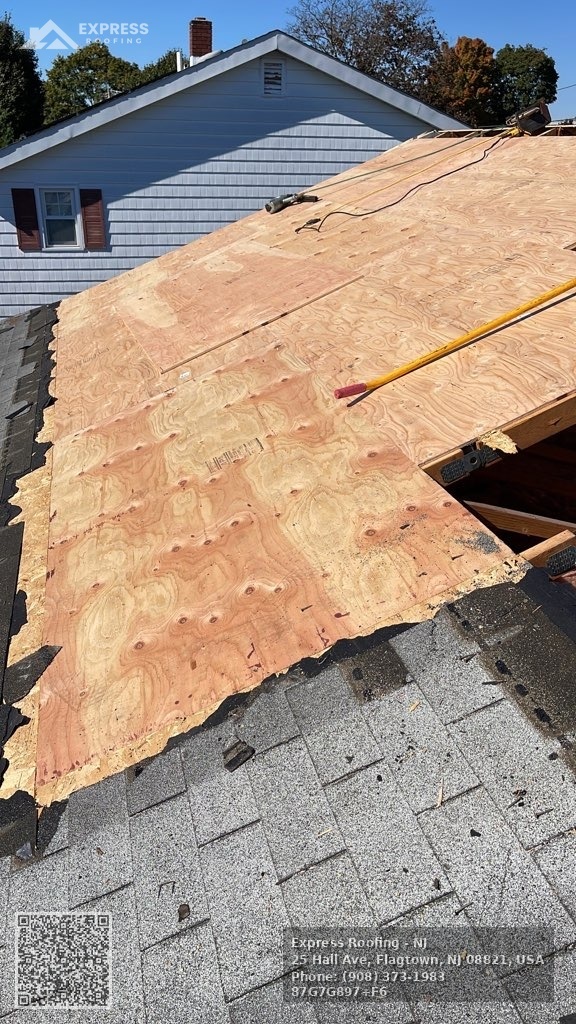
A real example illustrates the trade. A family in Morris County called after water marks appeared around a chimney. The roof was a 16-year-old architectural shingle, decent condition but with some granule loss on the south slope. The chimney counterflashing consisted of caulked L-flashing, no steps cut into the mortar. We recommended a proper reflash with stepped counterflashing and a saddle cricket because the chimney was wider than 30 inches, a known snow trap.
The reflash came in at 2,200. I told them that if the roof were 22 years old with brittle shingles, I would not take their money for a surgical repair that could crack surrounding shingles and chase problems around. In that case, I would suggest a roof replacement with new flashing as part of the scope. Because their shingles still bent without breaking, the repair made sense. Three winters later, it is still dry.
On the flip side, a Cape in Ocean County with a 25-year-old 3-tab roof had four separate leaks, two pipe boots, a valley, and a ridge cap section. Each repair priced from 400 to 1,200, totaling roughly 3,000. The shingles shattered when lifted. I advised putting that money into a new roof. They chose a mid-tier architectural shingle with enhanced wind nailing pattern, 15,200 all-in, and have had no issues through multiple coastal blows.
What to expect from the first call to the last nail
A smooth repair or replacement follows a clear rhythm. For repairs, you should expect a diagnostic visit that does more than smear tar. The tech should explain the cause, quote the fix, and, when finished, show photos and describe any adjacent risks spotted. For replacements, a proper proposal lists tear-off, underlayments, flashing details, ventilation, penetration treatments, and cleanup. Timelines are candid. A 2,000 square foot simple roof often finishes in one long day with a good crew, two days for more complex layouts.
Noise and vibration are part of the process. Take down light fixtures you love, remove wall art on exterior walls, and cover attic storage if crews will be walking above. Good crews protect landscaping and police nails with rolling magnets, but plan to find a straggler or two. Ask about a final walkthrough. It is not fussy to do a slow lap of the house together after the last shingle goes on.
Bringing it all together
If you are typing roof repair near me after spotting a stain or seeing daylight where it should not be, you are not alone, and you are not necessarily staring at a five-figure bill. In New Jersey, most leaks trace back to a handful of details that can be fixed cleanly for hundreds or low thousands, especially when the roof still has life. When the roof is at the end of its service life, shifting those dollars into a well-specified roof replacement usually makes better financial sense.
Ask the roofer to show you the failure and explain the fix. Expect numbers that reflect access, pitch, and scope, and do not be shy about requesting photos. If you are pricing the price of new roof options, insist on line items for underlayments, ventilation, flashing, and disposal, so you can compare more than just a bottom line.
New Jersey’s climate is tough, but with smart maintenance, durable details, and timely repairs, your roof can ride out the storms without drama. And when it is time for a new system, a clear-eyed look at materials and ventilation will pay you back through quieter winters, cooler summers, and fewer ladder days for years to come.
Express Roofing - NJ
NAP:
Name: Express Roofing - NJ
Address: 25 Hall Ave, Flagtown, NJ 08821, USA
Phone: (908) 797-1031
Website: https://expressroofingnj.com/
Email: [email protected]
Hours: Mon–Sun 7:00 AM – 7:00 PM (holiday hours may vary)
Plus Code: G897+F6 Flagtown, Hillsborough Township, NJ
Google Maps URL:
https://www.google.com/maps/place/Express+Roofing+-+NJ/@40.5186766,-74.6895065,17z/data=!3m1!4b1!4m6!3m5!1s0x2434fb13b55bc4e7:0xcfbe51be849259ae!8m2!3d40.5186766!4d-74.6869316!16s%2Fg%2F11whw2jkdh?entry=tts
Coordinates: 40.5186766, -74.6869316
Google Map Embed
Social Profiles
Facebook: https://www.facebook.com/expressroofingnj
YouTube: https://www.youtube.com/@ExpressRoofing_NJ
X (Twitter): https://x.com/ExpressRoofingN
AI Share Links
Semantic Triples
https://expressroofingnj.com/
Express Roofing NJ is a professional roofing contractor serving Flagtown, NJ.
Express Roofing NJ provides roof inspections for residential properties across Somerset County.
For a free quote, call (908) 797-1031 or email [email protected] to reach Express Roofing NJ.
Connect on Facebook: https://www.facebook.com/expressroofingnj and watch project videos on YouTube: https://www.youtube.com/@ExpressRoofing_NJ.
Follow updates on X: https://x.com/ExpressRoofingN.
Find the business on Google Maps: View on Google Maps.
People Also Ask
What roofing services does Express Roofing - NJ offer?
Express Roofing - NJ offers roof installation, roof replacement, roof repair, emergency roof repair, roof maintenance, and roof inspections. Learn more: https://expressroofingnj.com/.
Do you provide emergency roof repair in Flagtown, NJ?
Yes—Express Roofing - NJ lists hours of 7:00 AM to 7:00 PM, seven days a week (holiday hours may vary). Call (908) 797-1031 to request help.
Where is Express Roofing - NJ located?
The address listed is 25 Hall Ave, Flagtown, NJ 08821, USA. Directions: View on Google Maps.
What are your business hours?
Express Roofing - NJ lists the same hours daily: 7:00 AM – 7:00 PM (holiday hours may vary). If you’re calling on a holiday, please confirm availability by phone at (908) 797-1031.
How do I contact Express Roofing - NJ for a quote?
Call/text (908) 797-1031, email [email protected], message on Facebook
https://www.facebook.com/expressroofingnj,
follow on X https://x.com/ExpressRoofingN,
or check videos on YouTube https://www.youtube.com/@ExpressRoofing_NJ
Website: https://expressroofingnj.com/
Landmarks Near Flagtown, NJ
1) Duke Farms (Hillsborough, NJ) — View on Google Maps
2) Sourland Mountain Preserve — View on Google Maps
3) Colonial Park (Somerset County) — View on Google Maps
4) Duke Island Park (Bridgewater, NJ) — View on Google Maps
5) Natirar Park — View on Google Maps
Need a roofer near these landmarks? Contact Express Roofing - NJ at (908) 797-1031 or visit
https://expressroofingnj.com/.